FNF: Everywhere at the End of Funk
About the Game
FNF: Everywhere at the End of Funk is a rhythm game built around the themes and music of The Caretaker's Everywhere at the End of Time. The game uses the familiar note-based gameplay of Friday Night Funkin', but its presentation changes as the story progresses.
The central story follows Boyfriend as his memory deteriorates. The game uses changes to music, artwork, dialogue, and gameplay presentation to represent this progression. The original release contains material across the Tutorial, Week 1, and Week 6 sections.
๐ง A Story About Memory Loss
The story does not use a conventional adventure structure.
Instead, the changes in Boyfriend's condition form the main narrative device. His surroundings and interactions become increasingly unfamiliar as the game progresses.
The project takes inspiration from Everywhere at the End of Time, a six-part album by The Caretaker that explores the progression of dementia through increasingly degraded music.
In the game, this concept appears through:
- Distorted music.
- Changes to character artwork.
- Unusual dialogue.
- Static visual effects.
- Changes to Boyfriend's animations.
- Altered rhythm-game presentation.
๐ต The Music Changes With the Story
Music is one of the most important parts of the experience.
The original version uses songs associated with Everywhere at the End of Time. The music becomes increasingly degraded as the story progresses.
The Tutorial uses "It's Just a Burning Memory", while the Week 1 section contains tracks such as:
- We Don't Have Many Days
- Childishly Fresh Eyes
- Additional songs associated with the story's progression.
The musical presentation is not simply a collection of ordinary rhythm tracks. The condition of the music itself forms part of the narrative.
๐ญ Boyfriend's Appearance Changes
Boyfriend does not retain the same presentation throughout the game.
His sprites and animations change as the story progresses. Some versions of the game use static or distorted character images, while later sections contain more noticeable visual effects.
The original version also changes several interface elements to match its theme.
For example, standard judgment text receives altered wording and punctuation:
- "Sick!!" becomes "Sick..?"
- "Good!" becomes "Goodโฆ"
- "Bad" becomes "Ohโฆ"
- "Shit" becomes "Huh..?"
These small changes help communicate that something is wrong with Boyfriend's perception.
๐บ The Visual Presentation Becomes Unstable
The visual design changes alongside the music.
You can encounter:
- Static character faces.
- Distorted backgrounds.
- Noise effects.
- Unusual screen elements.
- Changed character animations.
- Different versions of the standard FNF interface.
The visual effects can become uncomfortable for some people. The original game documentation and community wiki warn about flashing lights, shaking effects, loud sounds, and unsettling imagery.
๐ผ Familiar FNF Gameplay Remains
Despite the unusual presentation, the basic rhythm system remains recognizable.
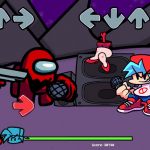
You still need to match incoming notes with the correct directional inputs.
Your main objectives are:
- Watch the note patterns.
- Press the corresponding directions at the correct time.
- Maintain your health.
- Complete each song.
- Follow the story between musical sections.
The changing presentation does not remove the basic rhythm-game structure.
๐ Tutorial and Week 1
The original release changes the normal Tutorial and Week 1 content.
The Tutorial uses "It's Just a Burning Memory" instead of the standard Tutorial song. Week 1 also receives new music and dialogue.
The Week 1 section centers on Daddy Dearest, but the character presentation and story context differ from the standard game.
The available documentation lists the following Week 1 songs:
- We Don't Have Many Days
- Childishly Fresh Eyes
- Additional story material connected to the week.
๐ฐ๏ธ Later Story Material
The original project also changes Week 6.
This section uses material connected to the later stages of the story and presents a much more degraded visual and musical environment.
The progression is important because the game does not simply use the same visual style from beginning to end. The music and presentation change to reflect the worsening condition of Boyfriend.
๐ฎ Game Controls
Keyboard
- Arrow Keys โ Hit notes
- W / A / S / D โ Hit notes when supported by the game build
- Enter โ Confirm menu selections
- Esc โ Pause or return from menus
The exact keyboard layout can vary depending on the version and engine used to run the game.
Mobile
- Tap the corresponding on-screen directional controls.
- Press each note when it reaches its target.
- Use the on-screen menu controls for navigation.